They would not have believed it, at first—the travelers, the skeptics, the curious minds from other ages. They would have stared at the people of this world and insisted that nothing was unusual at all. Their stride, their posture, their laughter in the morning light—all of it seemed familiar. Human. Ordinary.
Only after a time would the truth reveal itself, quietly and without fanfare, as most profound truths do.
For in this world, a woman of sixty bore the face and fire of someone in her thirties.
A man of one hundred and nineteen worried he had not yet chosen the right career path.
Friends who had parted ways at age eighty might cross paths again at one hundred and sixty, surprised to find the other unchanged in all the ways that mattered.
It was not immortality. The people here still died—still weakened, still withered, still returned to the earth that shaped them. But their journey to that final threshold stretched across five full centuries, each year unfolding with the gentle patience of a slow tide. Childhood raced by as it always had. Youth sharpened swiftly into adulthood. And then—somewhere in the early thirties—the great slowing began.
A plateau, long and steady, where decades stacked like quiet stones. Where faces changed so subtly that even the keenest eye could miss a century slipping by. Here, in this gentle stillness, most of life was lived. They called it nothing special. They had no need to name it. But an outsider watching them might whisper the phrase with awe:
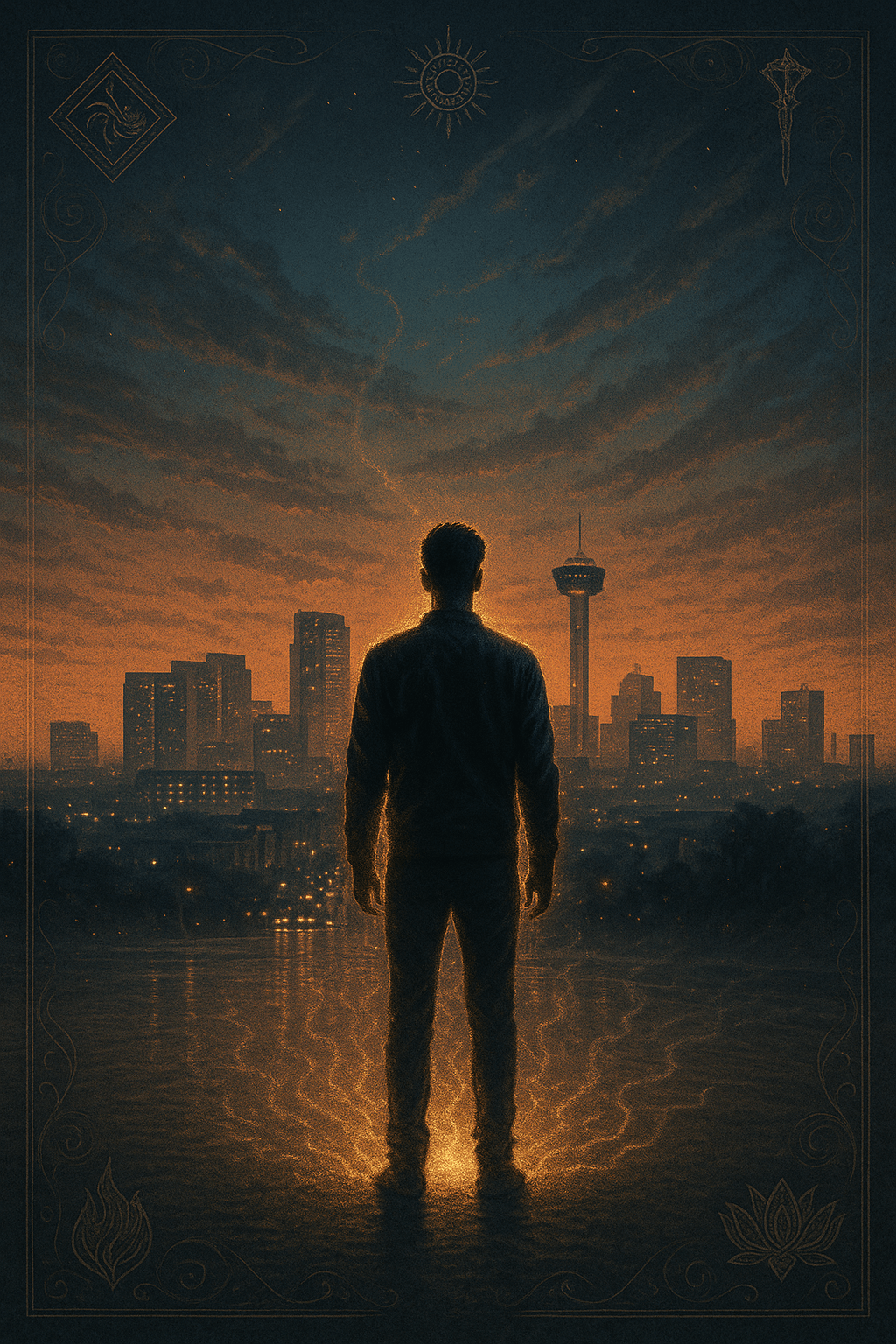
The Long Middle.
It shaped everything—how they learned, how they loved, how they fought, how they waited. Empires in this world rose not by the will of a single generation but by the steady, deliberate efforts of people who remembered centuries of triumph and error alike. Families grew like forests, wide and overlapping, elders who were not old, great-grandparents who were not frail. A neighbor might be one hundred and fifty with the same easy stride he’d had in his forties. A teacher might hold two hundred years of knowledge behind calm eyes.
And yet, beneath the extraordinary span of their years, their hearts remained stubbornly human.
They still fell in love too fast, argued too long, regretted too deeply. They still longed and grieved and hoped in ways no stretch of time could soften. They still resisted change even as they lived long enough to watch the world’s slow revolutions unfold like distant dawns.
And so this world—this place of half-millennium lives—began to feel familiar again.
Not because the lives were short, but because the people inside them were small, bright sparks in a vast stretch of time, clinging to meaning as humans always have.
This is the story of what it means to live in the long middle—
to grow slowly, love fiercely, remember deeply, and change… eventually.
These are their chronicles.
These are their centuries.
This is The Long Middle.


 Merritt's Imaginarium
Leave a comment